
How Large is Your Emergency Fund Buffer?
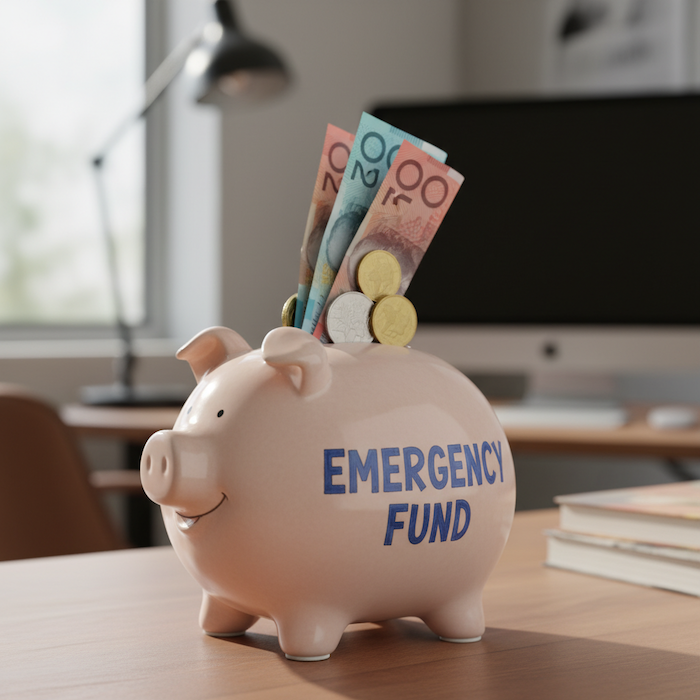
Life has a way of surprising us. Redundancies, health issues, rising interest rates, and unexpected bills can quickly destabilise even households that appear financially comfortable. Without an emergency fund buffer, these events can lead to spiralling debt, stress, and long-term setbacks. That is why building a financial safety net is one of the most important steps Australians can take toward financial security.
A financial safety net has two main components:
- An emergency buffer fund—readily accessible savings set aside for sudden expenses or income disruptions.
- Wealth protection products—insurance policies that provide income and financial stability in the face of illness, disability, or death.
This article explores both pillars in detail, explaining why they are essential, how much Australians should aim to set aside, the factors that influence the right level of savings, and the role professional financial planners play in tailoring strategies to individual households.
What Is an Emergency Buffer Fund?
An emergency buffer fund—often called an emergency savings account—is a dedicated pool of money held separately from day-to-day accounts. Its purpose is simple: to cover essential living expenses when life throws up unexpected challenges.
Unlike investment accounts, which may be tied up in volatile markets, or superannuation balances, which are inaccessible until retirement (except in limited circumstances), an emergency fund is liquid and immediately available.
Key Characteristics
- Accessibility: Kept in a high-interest savings account or offset account, not locked in term deposits.
- Stability: Not exposed to investment risks—its role is certainty, not returns.
- Purpose-driven: Strictly for emergencies such as medical bills, urgent car repairs, or covering costs during unemployment.
The Australian Securities and Investments Commission (ASIC) notes that an emergency fund helps people avoid turning to high-interest credit cards or payday loans when unplanned expenses arise .
Why an Emergency Fund Is Essential
Protection Against Income Shocks
Australia’s labour market, while relatively stable, is not immune to downturns. The unemployment rate averaged 3.8% in mid-2025, but industries like construction and retail face higher risks of redundancies. Households without savings often struggle to meet rent or mortgage payments during job losses.
Managing Unexpected Expenses
According to Finder’s Consumer Sentiment Tracker, one in three Australians could not cover a $1,000 unexpected bill without borrowing . This indicates a widespread vulnerability to relatively minor financial shocks.
Reducing Stress and Improving Decision-Making
Financial stress is a major contributor to anxiety and relationship strain. Research by Beyond Blue highlights that people with emergency savings report lower stress levels and improved wellbeing . With a buffer in place, households can make rational decisions rather than panic-driven ones.
How Much Should Be Set Aside?
There is no one-size-fits-all answer, but financial professionals often suggest three to six months’ worth of essential living expenses as a baseline.
- ASIC’s MoneySmart recommends starting with $2,000 and building gradually toward several months of expenses .
- The Australian Bureau of Statistics (ABS) household expenditure data shows that average weekly household spending is around $1,841 as of 2024 . For many families, this equates to needing between $22,000 and $44,000 in an emergency buffer.
Factors That Influence the Ideal Size of the Fund
While three to six months’ expenses is a useful rule of thumb, the ideal size varies depending on individual circumstances.
1. Debt Levels
- Households with high mortgage repayments or consumer debt need larger buffers to avoid falling behind on obligations.
- Those with minimal or no debt may require a smaller buffer.
2. Household Income and Dependents
- Single-income households face higher risks, as the loss of one income means total reliance on savings.
- Families with dependents must plan for schooling, healthcare, and living costs, increasing the recommended fund size.
3. Employment Stability
- Workers in casual or contract roles are more vulnerable to income disruptions and should aim for the upper range of six months or more.
- Public sector employees with strong job security may be able to maintain a smaller buffer.
4. Access to Credit or Other Assets
- Households with redraw facilities or offset accounts on their mortgage may have greater flexibility.
- Those without such access need higher cash buffers.
Beyond Savings: The Role of Wealth Protection Products
An emergency buffer protects against short-term shocks. For longer-term or catastrophic events, insurance plays a critical role.
Income Protection Insurance
- Replaces up to 75% of income if illness or injury prevents work.
- The Australian Prudential Regulation Authority (APRA) notes that the median income protection benefit duration is around two years , which can prevent households from exhausting savings during prolonged illness.
Total and Permanent Disability (TPD) Insurance
- Provides a lump sum if an individual becomes permanently disabled.
- Helps cover rehabilitation costs, home modifications, and loss of earning capacity.
Life Insurance
- Pays a lump sum to dependents in the event of death.
- ASIC reports that 70% of families would face significant financial hardship within one year if the main income earner passed away .
Trauma (Critical Illness) Insurance
- Covers conditions such as cancer, heart attack, or stroke.
- Provides immediate cash for medical expenses and lifestyle adjustments not covered by Medicare or private health insurance.
These products are often available through superannuation, but coverage levels vary. A 2022 report by Rice Warner estimated that Australians are underinsured by more than $1.8 trillion across life and TPD cover . This gap highlights the importance of reviewing policies regularly.
Integrating Emergency Funds and Insurance: A Balanced Strategy
While savings provide liquidity, insurance protects against risks too large to self-fund. A robust financial safety net integrates both:
- Emergency Fund: Covers immediate short-term costs.
- Income Protection & Trauma Insurance: Provides medium-term stability.
- Life & TPD Insurance: Safeguards long-term household security.
This layered approach ensures resilience across a range of scenarios, from a $2,000 car repair to a permanent disability.
The Role of Experienced Financial Planners
Many Australians underestimate either their expenses or their insurance needs. This is where professional financial planners provide critical value.
Comprehensive Assessment
- Evaluating household budgets, debt obligations, and existing insurance through superannuation.
- Stress-testing against scenarios like job loss, illness, or recession.
Tailored Recommendations
- Adjusting emergency fund targets based on family size, career stability, and debt levels.
- Recommending suitable levels of insurance to close protection gaps.
Strategic Structuring
- Advising whether to hold policies inside or outside superannuation.
- Helping balance premium costs with affordability.
The Financial Planning Association of Australia (FPA) stresses that personalised advice is essential because no two households have identical financial circumstances .
Common Pitfalls to Avoid
- Relying on Credit: Credit cards and buy-now-pay-later schemes often worsen financial crises rather than solve them.
- Neglecting Insurance: Many Australians mistakenly believe superannuation insurance is sufficient, but coverage is frequently inadequate.
- Overfunding Cash Accounts: While savings are essential, holding excessive amounts in low-interest accounts can limit long-term wealth creation. Balancing emergency funds with investments is key.
- Failing to Review: Financial circumstances change—new debts, children, or employment shifts all require updating buffers and insurance.
Practical Steps for Australians
- Start Small: Even $20 a week into a dedicated account builds momentum.
- Automate Savings: Set up automatic transfers to prevent spending temptations.
- Leverage Windfalls: Tax refunds, bonuses, or inheritances can boost emergency funds.
- Review Insurance Annually: Align cover with current income, debts, and dependents.
- Seek Professional Guidance: An accredited financial planner can identify blind spots and help prioritise actions.
Conclusion
A financial safety net is not a luxury—it is the foundation of financial resilience. An emergency buffer fund provides immediate security, while wealth protection products safeguard households from long-term financial devastation. Together, they create a layered shield against life’s uncertainties.
Australians who work with financial planners to evaluate their circumstances, set realistic emergency savings targets, and secure appropriate insurance are far better placed to weather unexpected storms. By taking action today, families can protect their future wellbeing, reduce stress, and maintain control over their financial journeys.
References
- Australian Securities and Investments Commission (ASIC). MoneySmart – Emergency Funds and Insurance Guidance. https://moneysmart.gov.au
- Finder. Consumer Sentiment Tracker – Emergency Savings. 2024. https://www.finder.com.au
- Beyond Blue. Financial Stress and Mental Health. 2023. https://www.beyondblue.org.au
- Australian Bureau of Statistics (ABS). Household Expenditure Survey 2024. https://www.abs.gov.au
- Australian Prudential Regulation Authority (APRA). Life Insurance Claims and Benefits Data. 2023. https://www.apra.gov.au
- Rice Warner. Underinsurance in Australia Report. 2022. https://www.ricewarner.com
- Financial Planning Association of Australia (FPA). Value of Financial Advice. 2023. https://www.financialplanning.org.au