
WA Economy Update
Western Australia's economy is well-positioned for continued, albeit more moderate, growth in the coming years. The latest WA economy update confirms that the state's strong fiscal position, coupled with government investment in infrastructure and economic diversification, provides a solid foundation for navigating potential challenges. For investors, the housing market, particularly the unit segment, and the tourism sector present potential opportunities. However, it is crucial to remain mindful of the risks associated with global economic conditions and commodity price volatility.
WA Economy Update
| Indicator | Latest Value(s) / Trend | Significance / What It Suggests |
| Population growth | WA’s population rose by ~2.5% in year to Sept 2024 (≈ 72,600 people) (Western Australian Government). Forecast population growth is expected to slow to ~1.8% in 2025-26 and 2026-27. (WA Industrial Relations Commission) | High population growth boosts demand for housing, infrastructure, services. Slower growth ahead may ease some pressures but long lead times in property/infrastructure mean momentum remains. |
| Employment / Unemployment | Employment in WA reached ~1.642 million in early 2025. (Our State Budget) Unemployment rate around 4.1-4.2% (seasonally adjusted/trend), recently ticked to 4.2%. (Watc) Participation rate high, ~67.0% (with employment-to-population ratio also among highest of states) (Watc) Underemployment/underutilisation creeping up (underemployment ~5.9-6.0%, underutilisation ~10.1-10.3%) (Watc) | Labour market remains strong; WA has among the lowest unemployment rates of Australian states; but signs of softening/growth moderation emerging. High participation suggests supply of labour is responding to demand, but underutilisation suggests some slack. |
| Domestic economy / State Final Demand (SFD) | SFD grew by ~3.4% in the year to the March quarter 2025, which was the strongest growth among all Australian states. (Our State Budget) Domestic economy (SFD) has expanded ~25.8% since 2019 compared with ~15.9% nationally. (Our State Budget) Forecast: SFD growth expected to moderate to ~2.5% in forward years. (Our State Budget) | Strong momentum from households, government, business. But moderation expected — possibly due to global headwinds, trade uncertainties, and a cooling in demand. |
| Budget / Fiscal position | WA’s 2024-25 operating surplus was ~A$2.5 billion; forecast operating surplus for 2025-26 is ~A$2.4 billion. (Alvarez & Marsal) Total revenue budgeted at ~A$50.257 billion in 2025-26, with expenses ~A$47.844 billion. (Alvarez & Marsal) The Government has increased investment in infrastructure (renewables, water, electricity network, schools, TAFE etc.) in Budget Paper 3. (Our State Budget) | A surplus position gives WA Government room to invest and stimulate without excessive borrowing. Infrastructure spending can help alleviate bottlenecks, support growth, especially in regional / growth corridors. |
| Housing / Construction | Dwelling commencements: actual 2023-24 ~15,036; forecast 2024-25 ~19,000-21,000; forecast 2025-26 ~20,000-22,000; further modest increase in 2026-27 to ~21,000-23,000. (Western Australian Government) Property prices: Perth house median ~$800,000 in July 2025; units also rising; REIWA expects overall property price growth ~5-10% in 2025, with units possibly outperforming houses. (REIWA Public Website) | Housing supply is rising, but still under pressure. Strong price growth suggests demand continues to exceed supply, especially for units. Affordability pressures for first-home buyers, renters likely to persist. Infrastructure, planning constraints may limit supply. |
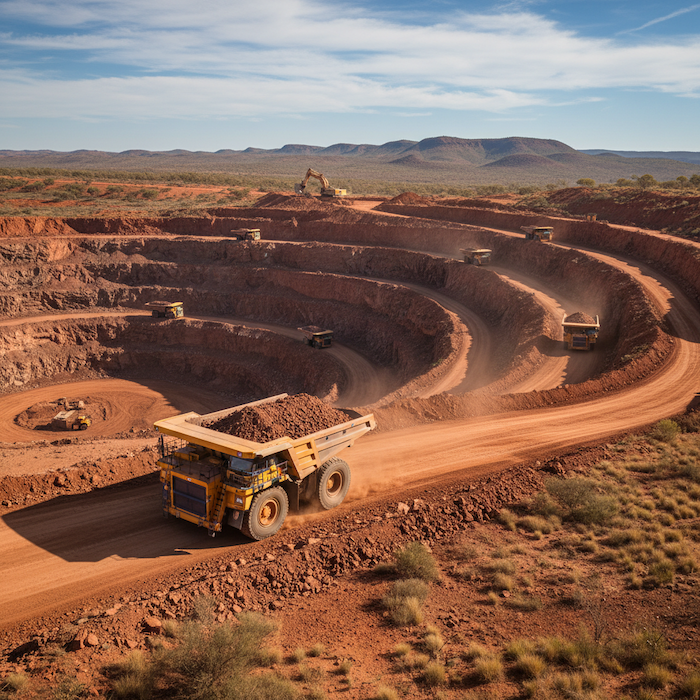
| Sector Performance – Mining / Resources | Mining remains a major driver of investment: in 2023-24, mining accounted for 44% of total investment in WA. (Western Australian Government) Iron ore: WA exported ~889 million tonnes in 12 months to March 2025; but value dropped (~13.3%) compared to previous period due to lower prices. (Watc) Forecast iron ore price for 2025-26 is expected to decline towards long-run average (~US$71 per tonne) after ~US$98 in 2024-25. (Watc) | WA’s fortunes are still heavily tied to resources, especially iron ore. The drop in prices reduces royalty, export earnings and can reduce investment returns. Diversification and adding value (processing, renewables, etc.) will influence resilience. |
| Tourism | Year ending March 2025: ~10.6 million overnight trips in WA; spending A$13.4 billion (overnight visitor spend) up ~2% from prior year. (KC User Content) International visitation up ~13% from prior year; international spend ~A$3.2 billion (28% up) and ~33% above 2019 levels. (KC User Content) Hotel occupancy strong: WA average ~75.4%, Perth ~77.7%; ADR (average daily rate) ~$227.68; RevPAR ~$171.69. (KC User Content) | Tourism is recovering, likely helping hotels, hospitality, regional economies. However, growth is relatively modest, and tourism remains susceptible to international travel restrictions, currency fluctuations, and consumer confidence. |
| Agriculture | Less recent, detailed data in the sources I located; agriculture remains an important employer and contributor, especially in regional WA. Some government focus in strategic industries, land, water supply improvements, etc. (see Budget Paper). (Our State Budget) | Agriculture likely faces typical pressures — weather/climate risk, input costs, labour constraints, global commodity price volatility. Policy support and infrastructure (e.g. water, transport) are key. |
Government Forecasts & Policy Changes
- Economic growth / GSP forecasts: According to the WA Government’s 2025-26 Economic & Fiscal Outlook, WA’s domestic economy (SFD) is set to grow moderately over forward years, with growth rates expected to fall from recent highs to around 2-3% per annum in the near term. (Our State Budget)
- Employment forecasts: Annual average employment growth forecast to slow to ~1.75% in 2025-26 and ~1.5% per annum in subsequent years. Unemployment forecast to creep up from ~3.5-4% toward ~4.25% over the medium term. Participation rates projected to remain high, slightly easing. (WA Industrial Relations Commission)
- Housing / Construction pipeline: As above, dwelling commencements expected around 20,000-22,000 in 2025-26. The government has included in its budget fundings to support housing supply (though not always sufficient to meet high demand). Infrastructure spending is also emphasised to support growth areas. (Western Australian Government)
- Policy / Budget initiatives:
- Infrastructure investment: Budget 2025-26 includes top-ups to Strategic Industries Fund; new investment in electricity networks (to connect renewable energy projects); expansion of water supply; upgrades to schools and TAFE settings. (Our State Budget)
- Economic diversification & decarbonisation being given more emphasis. (Our State Budget)
- Property / housing policy: While exact regulatory changes vary, the government is aware of affordability challenges. Planning, zoning, utilities/infrastructure lag (which affect supply) are part of policy discussions. REIWA forecasts assume continued price growth but moderated. (REIWA Public Website)
- Risks identified: Global trade uncertainties (especially exposure to Chinese demand, US trade policy) are flagged. Supply constraints (labour, materials, capacity) in construction and housing. Also, international commodity price volatility. (Our State Budget)
Sector-by-Sector Deep Dive
Mining / Resources
- Production & trade: Iron ore exports remain massive (~889 million tonnes) though value down due to weaker prices. (Watc) Other commodities such as gold, nickel continue, but production/value dynamics vary. (Western Australian Government)
- Investment and royalties: Mining dominates investment metrics (~44% of total investment in 2023-24). Royalty receipts are very sensitive to price. For iron ore, royalty income falls when prices drop, even if volumes remain high. (Watc)
- Challenges and opportunities: Declining unit prices for major export commodities will dampen returns, especially for projects with high cost or low grade. On the flip side, demand from battery metals, critical minerals, and perhaps more local processing (value adding) present longer-term opportunity. Government’s focus on strategic industries & decarbonisation aims to capture some of that. (Our State Budget)
Construction & Housing
- Rising yet supply constrained: commencements rising toward ~20,000-22,000 for 2025-26. (Western Australian Government) But capacity constraints (labour, materials, approvals) are slowing completions and starts. (Western Australian Government)
- Property prices: Perth median house price around A$800,000 in mid-2025; units also record-setting. REIWA forecasts ~5-10% growth in 2025 depending on the type (units may outperform houses). (Holdsworth Real Estate)
- Infrastructure investment is intended to support growth in residential areas: water, transport, electricity networks, schools. Zoning and planning still key bottlenecks. Government’s budget allocates funds toward infrastructure. (Our State Budget)
Tourism
- Solid recovery: 10.6 million overnight trips; ~$13.4 billion spend. International visitor numbers are ~91% of 2019 volumes, with international spend up 28% year on year. (KC User Content)
- Growth uneven: Perth and regional WA performing differently; some regions (e.g. Kimberley, Pilbara, Mandurah) showing stronger occupancy increases. (KC User Content)
- Challenges: global travel cost, exchange rates, airline capacity, consumer confidence are risk factors. Continued investment in hotels, infrastructure, visitor experiences needed.
Agriculture
- Data less up-to-date in the sources I found, but key challenges include climate variability, water supply, labour costs, and transport/logistics, especially for remote/regional producers.
- Policy support via state budget in water supply expansions, land management, and strategic industries fund help.
Implications for Property Owners, Investors & the Broader Economy
Here are what the data suggests for different stakeholders.
| Stakeholder | What the Data Means (Opportunities / Risks) |
| Property Owners (homeowners / landlords) | • Capital growth likely to continue in 2025 (esp. in units and in suburbs with affordability + infrastructure). But growth may slow compared to the rapid rises seen in 2023-24. • Rental market tightness likely to persist given demand (population growth, interstate migration) and lagging supply. Landlords may benefit from strong rental yields in some suburbs, but costs (rates, maintenance, interest rates) are also rising. • Affordability pressure for first home owners: rising prices + cost of borrowing + cost of living may squeeze purchasing power. • Location matters: suburbs with good transport, schools, utilities, and infrastructure investments are likely to outperform. |
| Investors (residential / commercial / tourism / resources) | • Residential property: units might offer better growth in the near term than houses, but more risk (higher maintenance, strata fees, regulatory risk). Commercial property depends heavily on location and sector (offices vs retail vs industrial). • Resources / mining investment: projects with lower cost base, access to labour, and proximity to infrastructure stand better; exposure to price volatility is real risk. Consider timings, approvals, environmental/regulatory risk. • Tourism investment: improving overnight visitor numbers suggest viable opportunities in hotel, events, regional tourism infrastructure; but careful with over-capacity, seasonal variance, and margin pressures. • Diversification & value-adding is increasingly important (e.g. processing, renewables, critical minerals) as raw commodity price cycles are volatile. |
| Broader Economy / Government | • The strong employment and population growth support public revenue (taxes, spending) but also increase demand for services (health, transport, education) and infrastructure. • Fiscal surpluses offer a buffer; prudent for WA to invest in infrastructure and diversify to reduce over-reliance on mining/iron ore. • Managing inflation and supply constraints will be necessary: material & labour shortages, rising costs, and possibly rising interest rates globally could spill in. • Global trade exposures (particularly China, US policy) are risk factors. • Regulatory / planning reform may help unlock housing supply and reduce bottlenecks. |
Expert Commentary & Future Prospects
Here are some observations based on recent commentary and economic modelling:
- On moderation rather than contraction: Economists generally expect WA to slow from its peak growth but not to enter recession. The combination of high population growth, strong domestic demand, and ongoing infrastructure investment provides momentum. But growth will likely settle into the 2-3% range.
- Commodity price outlook cautious: For iron ore especially, analysts expect softer prices in 2025-26 (forecast US$71 per tonne) which will reduce export earnings, royalties, potentially dampen investment in new mining expansions. Long-term demand (steel production, infrastructure, construction in Asia) could support recovery. (Watc)
- Housing supply risks: The ability of supply to meet demand is a major factor. Delays in approvals, supply chain issues for construction materials, labour shortages are limiting growth in commencements and completions. If these constraints are not addressed, price pressures will continue, especially in desirable suburbs or regional areas with amenity.
- Policy shifts: The State Government has signalled stronger focus on decarbonisation, renewable energy infrastructure, value-adding in mining, strategic industries. These could create new investment opportunities, but also require regulatory clarity and stable policy.
- International risk exposure: WA is exposed to global economic cycles, especially demand from China for iron ore and other minerals. Fluctuations in global demand or geopolitical risk (trade policy, shipping, environmental regulation) could rapidly alter revenue forecasts.
What to Watch Going Forward
Here are indicators and developments that will be particularly telling for WA’s economic path.
- Iron ore & commodity price trends (especially China, India demand).
- Dwelling completions vs commencements – supply pipeline and how many new homes actually reach the market.
- Cost pressures in construction – labour, materials, energy.
- Interest rate trajectory – both in Australia broadly and borrowing cost in WA, which will affect property investment and consumer demand.
- Migration flows (interstate + international) – whether high net migration continues, because that fuels population growth, housing demand, labour supply.
- Government policy changes on planning, zoning, infrastructure delivery especially in growth corridors, regional areas.
- Tourism rebound – flight capacity, international visitor growth, regional vs metro split.
- Diversification and value-added industries – whether WA capitalises more on downstream processing, renewables, critical minerals beyond extraction.
Areas of Concern
While the picture is largely positive, there are important caveats:
- Housing affordability already pressured; interest rates, inflation, and cost of living likely to squeeze households.
- Supply chain / labour constraints – especially for construction and regional areas.
- Commodity dependency risk – revenue volatility; boom/bust cycles.
- Global headwinds – trade tensions, slowing global growth, climate policy could affect export demand.
- Environmental / regulatory risk – especially for mining / agriculture / tourism in fragile ecosystems or where infrastructure is challenging.
Summary & Concluding Thoughts
Western Australia remains one of Australia’s strongest economies in 2025, showing resilience in employment, population growth, and domestic demand. While growth is expected to moderate from recent highs, the State is on a relatively secure footing thanks to surpluses, investment in infrastructure, and diverse opportunities in mining, tourism, and construction.
For property owners and investors, growth in housing prices and rents is likely to continue, though less explosively. Units may outperform houses in some markets. Key will be investment in the right locations, with infrastructure and amenity.
For government and broader stakeholders, the task is to manage moderation, avoid supply bottlenecks, ensure sustainable growth, and diversify so that WA’s economic fortunes are less tied to volatile commodity and external demand.
References
- Government of Western Australia. WA dominates with strongest employment and population growth. Media statement, March 2025. Available at: https://www.wa.gov.au/government/media-statements/Cook%20Labor%20Government/WA-dominates-with-strongest-employment-and-population-growth-20250320
- Western Australian Industrial Relations Commission. Minister’s Submission – Economic Outlook 2025. Attachment A, May 2025. Available at: https://www.wairc.wa.gov.au/assets/Documents/WageCase/2025/Submissions/Submission-Minister-Attachment-A-Economic-Outlook-2025.pdf
- WA Treasury / WA State Budget. 2025-26 Budget Papers (Budget Paper No. 3: Economic and Fiscal Outlook). Available at: https://www.ourstatebudget.wa.gov.au/2025-26/budget-papers/bp3/2025-26-wa-state-budget-bp3.pdf
- Western Australian Treasury Corporation. Labour Force Data – June & July 2025. Available at: https://www.watc.wa.gov.au/media/uflf5mww/labour-force-june-2025.pdf and https://www.watc.wa.gov.au/media/shqiaroz/labour-force-july-2025.pdf
- Western Australian Treasury Corporation. WA Iron Ore Profile – May 2025. Available at: https://www.watc.wa.gov.au/media/wwtbi5xn/waironoreprofilemay2025.pdf
- WA Department of Treasury. Western Australia Economic Profile – July 2025. Available at: https://www.wa.gov.au/system/files/2025-08/waeconomicprofilejuly2025.docx
- WA Government. Economic Update – April 2025. Available at: https://www.wa.gov.au/system/files/2025-08/update-april-2025.pdf
- Real Estate Institute of Western Australia (REIWA). Market Forecast Update – 2025. Available at: https://reiwa.com.au/news/reiwa-market-forecast-update/
- REIWA. Units set to pass houses for price growth in 2025. Market commentary, 2025. Available at: https://reiwa.com.au/news/units-set-to-pass-houses-for-price-growth-in-2025--reiwa-market-forecast-update/
- Holdsworth Real Estate. Perth Property Forecast – REIWA predicts 10% growth in 2025. Available at: https://holdsworth.com.au/perth-property-forecast-reiwa-predicts-10-growth-in-2025/
- Alvarez & Marsal. A view on the 2025-26 Western Australia State Budget. Press release, May 2025. Available at: https://www.alvarezandmarsal.com/press-release/a-view-on-the-2025-26-western-australia-state-budget
- CBRE (via Knowledge Centre). Investment Insights – August 2025. Available at: https://assets-us-01.kc-usercontent.com/53c284ed-8b6d-0077-d7d1-762b0c10baee/4fe67206-f6fd-40a0-8ceb-ae504f323e31/Investment%20Insights%20-%20August%202025.pdf